Healing & Repair
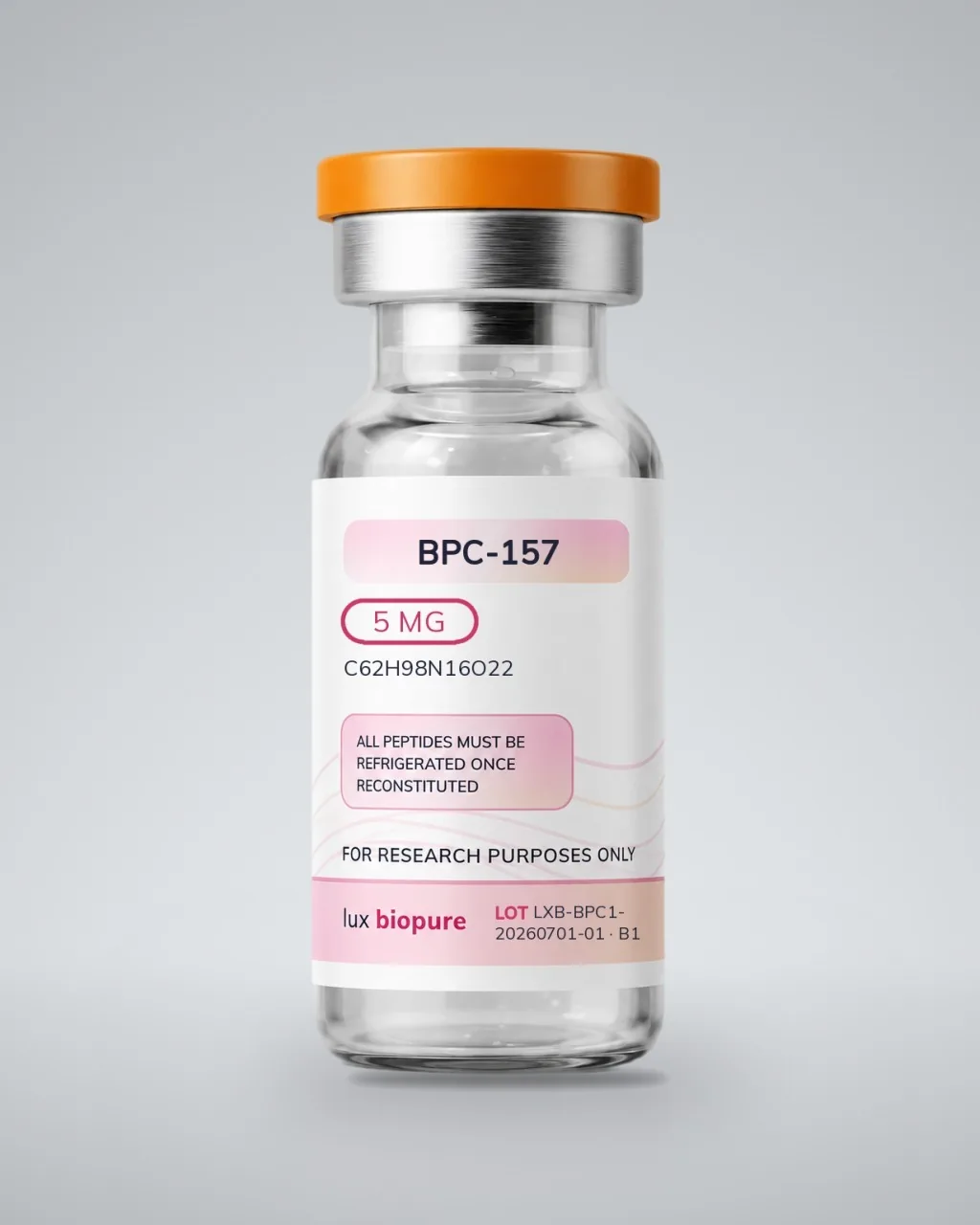
BPC-157 5mg
Animal models study its part in how tendons, ligaments, and muscle repair themselves. Research-grade BPC-157 (Body Protection Compound-157) is a synthetic 15-amino-acid pentadecapeptide, made for tissue-repair and cell-protection research. It comes from a protective protein found in gastric juice.
$40.00
Add this and you're $100.00 away from free shipping
- Interac e-Transfer Pay by Interac e-Transfer. We email your instructions right after you order; nothing is charged on this page.
Orders by 1:30 PM MT ship the same dayShips from Canada, every day
- Free shipping over $140. Most Canadian stores start free shipping at $200.
- Discreet, unmarked packaging.
- Third-party tested by Janoshik
- COA published per batch
Reconstitution calculator for BPC-157 5mg →
- Tested by Janoshik, every batchIndependent HPLC and mass spec. The lab is named on the report.
- The report is public before you orderPublished under the lot number printed on the vial, so you can match them on arrival.
- Ships from Canada within 24 hoursTracked and discreet. Free shipping over $140.
Certificate of Analysis
- Purity (HPLC)
- 99%+
- Format
- Lyophilized powder
- Storage
- −20°C (long-term)
- Shipping
- Canadian domestic
- Testing
- HPLC purity + content
This batch's COA publishes here the day Janoshik files results, track it on Lab Reports.
How BPC-157 is studied to work, in plain words
- BPC-157 is a lab-made chain of 15 amino acids, copied from a protective protein found in stomach fluid.
- It docks on no named receptor. Instead it acts on the cells lining the gut, steadying the cell wall against harm.
- It acts on VEGF, the signal for growing new blood vessels, and on eNOS, the enzyme that makes nitric oxide.
- It acts on fibroblasts and tenocytes, the cells that lay down new connective tissue and new tendon.
- Of 36 published studies one review read, 35 were done in animals and one in people.
These are findings investigators reported in rats, mice and rabbits in a laboratory. They are not a result for this vial, and not a result for any reader. BPC-157 is not approved by Health Canada or the FDA for any human or veterinary use, and everything Lux BioPure sells is supplied for laboratory research use only.
- [1]Protective effects of pentadecapeptide BPC 157 on gastric ulcer in ratsWorld Journal of Gastroenterology, 2004
- [2]Achilles detachment in rat, BPC 157 promoted tendon-to-bone repair and opposed corticosteroid aggravationJournal of Orthopaedic Research, 2006
- [3]Emerging use of BPC-157 in orthopaedic sports medicine, a systematic reviewHSS Journal, 2025
How it works, step by step
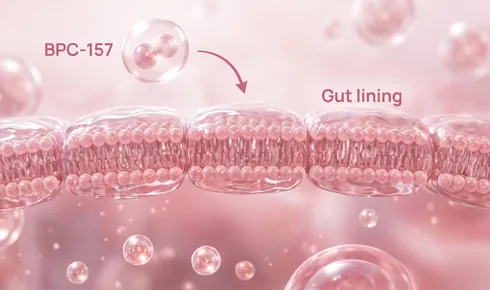
Step 1 of 3The cells lining the gut
Step 1 · Target
The cells lining the gut
- BPC-157 raises the stress-response proteins a cell makes when it is under attack.
- It steadies the cell wall against chemical and physical harm.
- Animal models track how well gut tissue holds together.
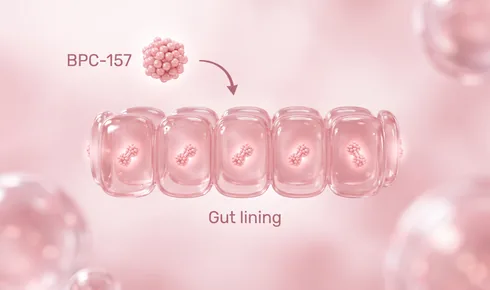
Stress-response proteins rise and the cell wall steadies
- The cell wall holds up better against chemical and physical harm.
- How well gut tissue holds together is what the animal models track.
MeasuredRats with stomach ulcers made in the laboratory: a 2004 study reported the ulcers closing faster in the animals given it.World Journal of Gastroenterology, 2004
Step 2 of 3VEGF, the new-blood-vessel signal
Step 2 · Target
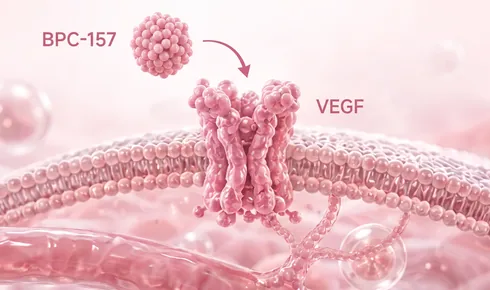
VEGF, the new-blood-vessel signal
- VEGF is the signal used to grow new blood vessels.
- BPC-157 raises it, and switches on eNOS, the enzyme cells use to make nitric oxide.
- Studied for how quickly blood, and the oxygen it carries, reaches hurt tissue.
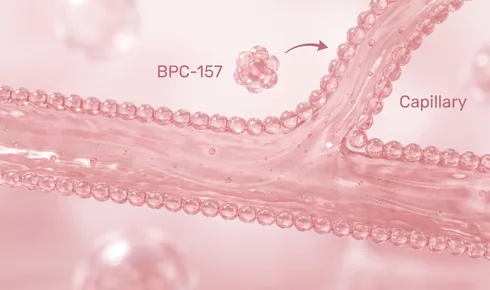
Nitric oxide widens small vessels
- Nitric oxide widens the small vessels around the repair.
- Blood, and the oxygen it carries, is what the animal work follows from here.
Measured2006 rat study of a repaired Achilles tendon: less swelling, better function and more new blood vessel growth than the steroid alone.Journal of Orthopaedic Research, 2006
Step 3 of 3Fibroblasts and tenocytes, the repair cells
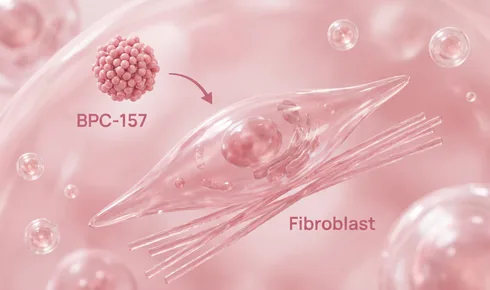
Step 3 · Target
Fibroblasts and tenocytes, the repair cells
- The cells that lay down new connective tissue and new tendon.
- BPC-157 spurs them to grow.
- Measured in animal injury models as how a tendon or ligament comes back together.
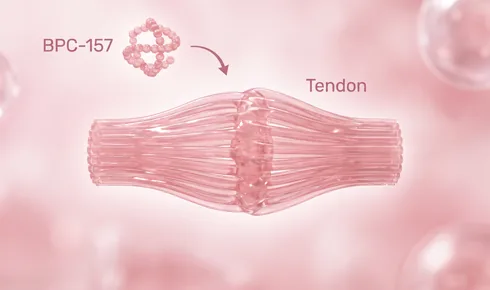
New connective tissue and new tendon are laid down
- Those are the cells that lay the new tissue down.
- Animal injury models follow a cut tendon and a crushed muscle from here.
Measured2025 review of 36 published studies, thirty-five of them in animals: better structure, function and strength in rats, and no human safety data at all.HSS Journal, 2025


What is BPC-157 5mg?
Research has looked at how it interacts with the nitric oxide system and growth hormone receptor levels.
Each vial is lyophilized to hold its structure in transit; refrigerate once reconstituted. Mix with sterile bacteriostatic water before use.
What is the molecule?
- Formula
- C₆₂H₉₈N₁₆O₂₂
- Mol. Weight
- 1,419.5 Da
- Sequence length
- 15 amino acids
- Half-life (est.)
- ≈ 4 h (sc)
- CAS
- 137525-51-0
- For laboratory research use only.
- Not for human or veterinary use.
- Not intended for diagnosis, treatment, cure, or prevention of any disease.
- Use only in a controlled lab setting, and only by trained staff.
Research Profile
preclinical research consensus for informational comparison only
What arrives, and what to do with it
The vial ships lyophilized, a sealed powder, not a ready-to-use liquid. It needs bacteriostatic water and a clean workspace before it is usable in a protocol.
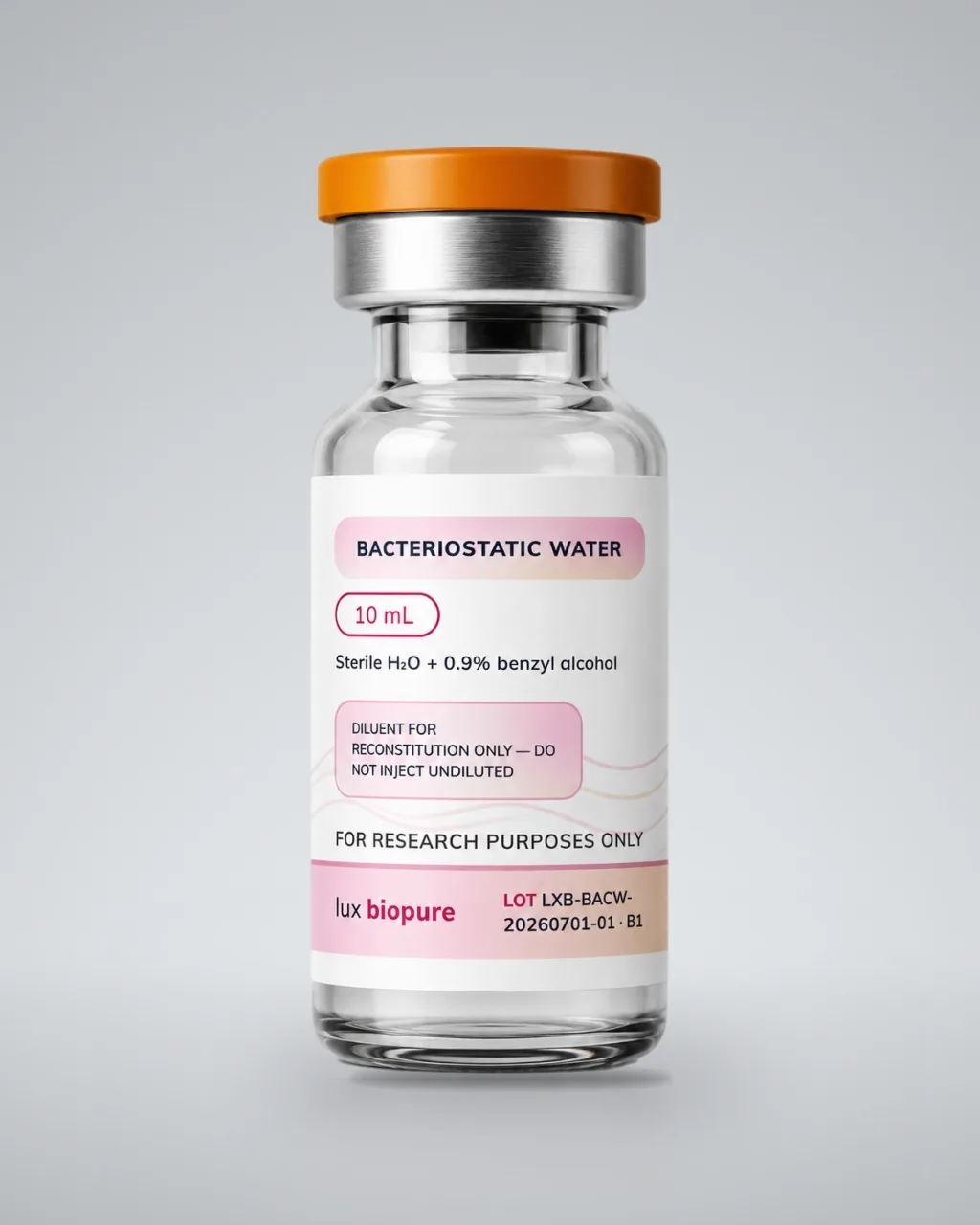
What's in the box
One sealed 5 mg vial of lyophilized powder, with its lot number printed on the label. The 10-pack is ten of that same vial. Bacteriostatic water is sold separately, so it goes in the order too if there is none on the bench.
Store cold and dark, warm before opening
The label on the vial says it plainly: store in a cool, dark place. Sealed, dark and at -20°C or colder, the powder holds for years. Bring the vial to room temperature before opening, then reconstitute, refrigerate at 2-6°C and use within 28 days.
How to tell it went right
A properly reconstituted vial dissolves into a clear, colorless solution, with no cloudiness and no particles. If it does not, or if the lot on the vial does not match the report on our lab reports page, stop and contact us before it goes into a protocol.
Questions about BPC-157 5mg
What is BPC-157 studied for?
Animal models study its part in how tendons, ligaments and muscle repair themselves. A 2025 systematic review in the HSS Journal read 36 published studies going back to 1993 and reported better structure, function and mechanical strength in rats after a cut Achilles tendon was repaired. Those are findings in rats, and not a result for this vial.
[3]Emerging use of BPC-157 in orthopaedic sports medicine, a systematic reviewHSS Journal, 2025
Has BPC-157 been studied in people?
Almost not at all. Of the 36 published studies that same 2025 review read, 35 were done in animals, and the reviewers stated plainly that they found no human safety data.
[3]Emerging use of BPC-157 in orthopaedic sports medicine, a systematic reviewHSS Journal, 2025
How is BPC-157 different from TB-500?
They come from different places and act in different ways. BPC-157 is a 15 amino acid chain copied from a protective protein in stomach fluid, and it acts on VEGF and eNOS, the signals behind new blood vessels. TB-500 is a short piece of thymosin beta-4 and works inside the cell, holding on to actin.
Is BPC-157 legal to buy in Canada for research?
Research peptides sold only for in vitro laboratory use sit in a legally distinct category from approved drugs, and that is the category this vial is sold in. Health Canada classifies a substance by marketing intent under the Food and Drugs Act, not by molecular structure, and Canada runs no licensing registry for research chemicals. BPC-157 holds no Drug Identification Number.
How is each batch tested?
An independent lab, Janoshik, runs HPLC and mass spec on every batch before it goes on sale. The report is published under the lot number printed on the vial label, so the two can be matched on arrival. The HPLC purity recorded for this product is 98%+.
What arrives in the box, and how is it stored?
One sealed 5 mg vial of lyophilized powder, with its lot number printed on the label. Sealed, dark and at -20°C or colder, the powder holds for years. Once reconstituted it is refrigerated at 2-6°C and used within 28 days.
Is BPC-157 for human use?
No. Everything Lux BioPure sells is supplied for laboratory research use only, not for human or veterinary use, and not to diagnose, treat, cure or prevent any disease. BPC-157 is not approved by Health Canada or the FDA for any human or veterinary use.
Pairs With
Frequently asked questions
Are Lux BioPure products for human consumption?
No. All products are sold strictly for lab and research use only. They are not meant to diagnose, treat, cure, or prevent any disease.
How are your peptides tested for purity?
An independent third-party lab checks every batch before we put it on sale. Results show 99%+ purity.
How fast is shipping in Canada?
Orders usually ship within 24 hours. Shipping is a flat $20 anywhere in Canada, and it is free on orders above $140 after coupons. No tax is added: the price plus shipping is what you pay.
Do I need to be a certain age to purchase?
Yes. You must be 19 years of age or older to purchase from Lux BioPure.
For research purposes only. Not for human consumption. All products are sold strictly as research chemicals for in vitro laboratory use.